 listicle
Why Independent Audio Storytelling Matters in 2026
Table of Contents
- Why Independent Audio Storytelling Matters More Than Ever
- The 'Independent' Distinction: Creator-Owned vs. Corporate Media
- The Benefits of Independent Podcasting for Listeners and Creators
- How Independent Audio Storytelling Redefines Media Consumption
- The Craft Behind the Sound: Storytelling Techniques and Sound Design
- Economic Sustainability for Indie Audio Creators
- Accessibility and Inclusivity in Independent Audio
- How to Support Independent Audio Creators: Practical Steps
- The Future of Independent Audio Storytelling
- Frequently Asked Questions
Last Updated: September 23, 2026
Why Independent Audio Storytelling Matters More Than Ever
Independent audio storytelling is the creation, production, and distribution of narrative sound content by creators who own their work, control their revenue, and answer to no corporate programming board. It matters because it keeps stories that would never survive a focus group alive and funded by the people who actually love them.
This guide from hush covers why that distinction is reshaping how people listen in 2026. At hush, we built an entire platform around the idea that the person making the story should be the person paid for the story.
Here's the part most coverage gets wrong: independent audio storytelling isn't a scrappy underdog phase before creators "graduate" to bigger studios. It's a permanent alternative ecosystem with its own economics, its own craft standards, and its own audience.
The 5 sections below cover the craft, the money, the accessibility angle, and exactly how to support independent audio creators without guessing.
That last point matters more than most listeners realize. The Federal Trade Commission's guidance on endorsements and disclosures makes clear that paid placements must be disclosed, which is one reason ad-free independent audio has become a draw for listeners who want a story, not a pitch.
The 'Independent' Distinction: Creator-Owned vs. Corporate Media
The real dividing line in audio isn't budget. It's who holds the master file.
Corporate-produced audio answers to advertisers, brand safety teams, and quarterly targets. A creator-owned show answers to its audience and its own creative instincts. That difference shows up in what gets made: riskier story structures, unfamiliar voices, subjects that don't fit a demographic spreadsheet.
A common mistake is assuming "independent" means "amateur." In practice, many independent audio storytellers work with the same microphones, editing software, and sound design discipline as studio teams. They just skip the approval chain.
The economic side is the sharper contrast. Platforms that pool subscription revenue and redistribute it can leave creators guessing. A transparent revenue-sharing model does the opposite: it tells creators exactly what share they keep. hush pays 70% of subscription revenue directly to the writers and voice actors behind the catalog, which is the clearest version of that idea we know of.
The Benefits of Independent Podcasting for Listeners and Creators
The benefits of independent podcasting land on both sides of the mic, but they aren't the vague 'authenticity' benefits most coverage lists. They're structural. Independent shows are built on a different ownership model, and that model produces specific, checkable advantages for listeners and creators alike.
Ownership, Editorial Control, and What Actually Gets Made
When a creator owns the master recording and the feed, three things change at once:
- Editorial control: the creator decides which stories get told, in what order, and how they end, no brand-safety review, no demographic spreadsheet trimming the edges off a story.
- Revenue control: the creator sets the price, the tier structure, and whether ads exist at all. Ad-free is a creative choice an indie can make; a corporate show usually can't.
- Catalog control: the back catalog stays with the creator. A corporate show can be pulled, rebranded, or buried when a parent company changes strategy. An indie feed stays put.
A common mistake is treating 'independent' as a production-quality tier. It isn't. Many independent audio storytellers use the same microphones, DAWs, and sound-design discipline as studio teams. The difference is the approval chain, not the gear.
Intimacy, Trust, and the Absence of Ad Breaks
Intimacy in audio comes from the absence of interruption. A story that plays start to finish without a mid-roll break keeps the listener inside the world the creator built. That continuity is what makes audio feel personal, private, and close.
Ad breaks do more damage than most people notice. They break the mood, reset attention, and remind the listener they're a target rather than a guest. An ad-free listening experience preserves the emotional resonance a story worked to build, and it's a benefit independent creators can actually deliver, because they aren't locked into an ad-revenue model by a parent company.
There's a disclosure angle here too. The Federal Trade Commission's guidance on endorsements and disclosures requires paid placements to be clearly disclosed. Listeners who want a story rather than a pitch increasingly treat an ad-free independent feed as the cleaner option.
Diverse Voices and Underrepresented Stories
Corporate catalogs optimize for the widest possible audience, which by definition means the edges get cut. Independent catalogs can serve the edges directly.
That's where underrepresented stories live: narratives that don't map to a clean marketing category, voices that don't sound like the last ten shows a listener tried. A curated library built by editors rather than algorithms tends to surface those voices instead of burying them under whatever's trending.
A common mistake among new listeners is treating a smaller catalog as a red flag. It's usually the opposite. Curation means someone chose each title on purpose.
The Creator-Side Payoff: A Direct Audience Relationship
For creators, the biggest benefit isn't creative freedom in the abstract, it's a direct line to the people who fund the work. A creator who knows their listeners by name, by review, and by reply can make decisions a corporate show can't: greenlight a niche season, kill a format that isn't working, or raise a price without a committee.
That direct relationship is also the only real insurance against platform risk. If the payout formula changes, a creator with an email list, a membership tier, and a loyal audience can move. A creator with none of those is renting their livelihood.
The economic side is the sharper contrast. Platforms that pool subscription revenue and redistribute it can leave creators guessing. A transparent revenue-sharing model does the opposite: it tells creators exactly what share they keep. hush pays 70% of subscription revenue directly to the writers and voice actors behind the catalog, which is the clearest version of that idea we know of.
How Independent Audio Storytelling Redefines Media Consumption
Independent audio storytelling is changing when, where, and why people press play, but the more interesting shift is who gets to listen at all. The consumption changes below are the ones competitors miss, because they're looking at the general audio market instead of the independent one.
Mood-Based Listening and Personalized Discovery
Searching by rigid tags assumes you already know what you want. Mood-based browsing assumes you know how you want to feel, which is usually the honest answer.
If you're coming from tag-driven platforms, expect an adjustment period. The first few sessions feel less precise. Then it clicks: you stop hunting for a specific title and start finding a tone that fits the evening.
The independent version of this is sharper than the corporate version. A corporate catalog can only offer moods that map to a large enough audience to justify the licensing. An independent catalog can offer a mood that fits a few thousand listeners, because the economics don't require a mass market to break even.
The Shift Away from Visual Media
Screen fatigue is real, and audio sidesteps it entirely. There's nothing to watch, nothing to scroll, and nothing left in your browser history. For personal, private listening, that matters.
Audio also fits into moments screens can't: driving, walking, lying in the dark. It's non-intrusive media in the truest sense. The story is there when you want it and invisible when you don't.
Accessibility and Inclusivity: The Consumption Shift Competitors Skip
This is the part most coverage of audio storytelling leaves out, and it's the part that matters most for independent creators.
Audio is the rare medium that works for listeners who can't see a screen, can't hold a device steady, or can't spare their eyes at all. No reading required, no interface to learn, no brightness settings, no captions to chase. You press play and the story arrives.
For listeners managing vision loss, chronic pain, fatigue, or a motor disability, that's not a convenience. It's access. The Web Content Accessibility Guidelines from the W3C set the standard most digital media is measured against, and audio-first content starts ahead of the curve because the core experience never depended on sight.
Independence lowers the barrier on the production side too. A creator who can't travel to a studio can record at home. A voice actor who can't perform live can record in short sessions. The equipment cost is modest compared to video production, and the distribution path is open. That combination, low entry cost plus direct audience funding, is why independent audio has become one of the more accessible creative fields for disabled creators. It's not charity. It's a production model that happens to fit.
Why This Matters for the Independent Ecosystem
When consumption shifts toward mood, screen-free moments, and accessibility, the independent catalog is positioned to win. Corporate platforms optimize for the largest possible audience in the most measurable format. Independent creators optimize for the specific listener in the specific moment. Those two strategies produce different catalogs, and the second one is growing.
The Craft Behind the Sound: Storytelling Techniques and Sound Design
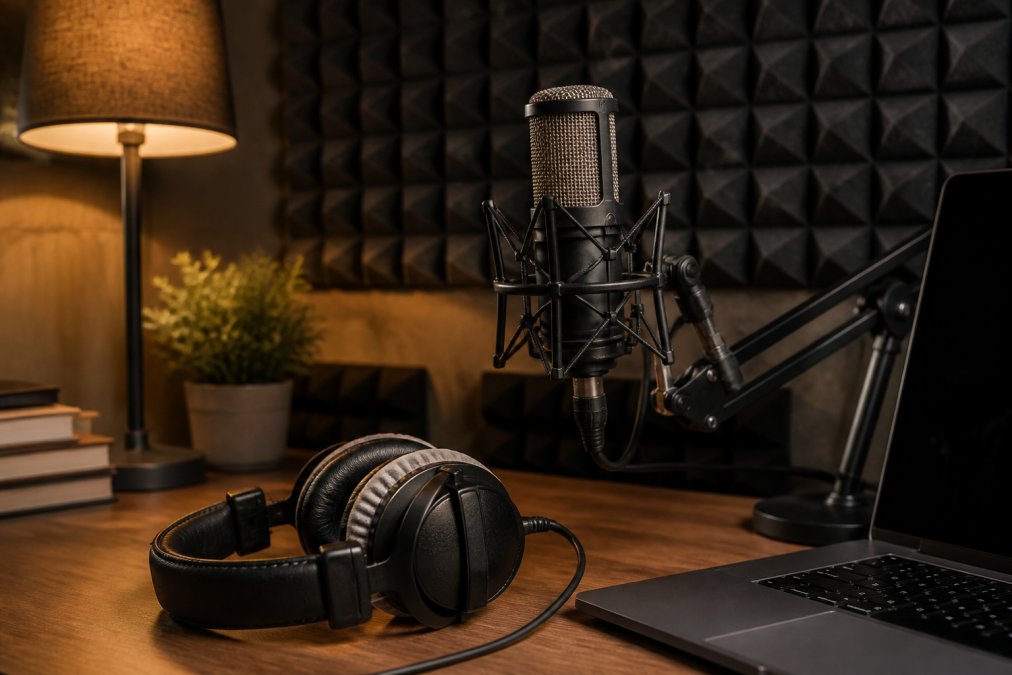
Sound design is the deliberate use of background soundscapes, spatial cues, and mixing choices to place a listener inside a scene. Good sound design doesn't announce itself. It makes you forget you're wearing headphones.
Building Immersive Audio Landscapes with Limited Budgets
You don't need a studio to build an immersive experience. You need restraint and a few deliberate choices.
- Record room tone in every space you use, then layer it under scenes
- Keep one consistent microphone for narration so the voice stays stable
- Use fewer effects, placed precisely, instead of constant background noise
- Pan sounds slightly left and right to create an audio landscape around the listener
- Cut silence deliberately; a beat of nothing can hit harder than a swell
A common mistake is over-layering. New creators stack music, ambience, and effects until the voice gets buried. The fix is subtraction, not more tracks.
Voice Acting and Emotional Resonance
Voice modulation does the heavy lifting in audio fiction. Pitch, pace, breath, and pause carry the emotional resonance that a camera would otherwise provide.
What most guides miss is that listeners build auditory imagery automatically. They cast the characters, furnish the rooms, and decide what the protagonist looks like. The performer's job isn't to describe the scene. It's to give the listener enough emotional truth that their own version of the scene holds together.
Economic Sustainability for Indie Audio Creators
Economic sustainability is the hard part of independence. Craft gets you a great episode. A working revenue model gets you a second season.
Revenue-Sharing and Subscription Models That Work
The models that hold up share three traits: recurring revenue, transparent splits, and a direct line to the audience.
- Revenue-sharing subscriptions: listeners pay one fee, and a defined share goes to creators
- Membership tiers: recurring support with perks like early access or bonus episodes
- Premium ad-free feeds: a paid tier for listeners who want no interruptions
- Direct support: one-time or recurring contributions tied to specific projects
Transparency is the deciding factor. A creator who can see exactly how their share is calculated will stay. A creator guessing at the math will leave.
The Role of Platforms in Fair Compensation
Platforms decide whether independence is viable. A host that takes a cut and offers nothing in return is a toll booth. A platform that pays creators a defined share and keeps the catalog curated is closer to a partner.
hush runs on that second model: one flat monthly fee for listeners, 70% of subscription revenue paid to the writers and voice actors, and no ad breaks anywhere in the catalog. That's the version of platform economics we'd want as creators ourselves.
Accessibility and Inclusivity in Independent Audio
Accessibility is audio's quiet superpower. A story told in sound works for listeners who can't see a screen, can't hold a device steady, or can't spare their eyes at all.
Audio as a Non-Intrusive, Screen-Free Medium
Screen-free media removes barriers that visual platforms quietly impose. No reading required, no interface to learn, no brightness settings, no captions to chase. You press play and the story arrives.
For listeners managing vision loss, chronic pain, or fatigue, that's not a convenience. It's access. The Web Content Accessibility Guidelines from the W3C set the standard most digital media is measured against, and audio-first content starts ahead of the curve because the core experience never depended on sight.
Breaking Barriers for Disabled Creators and Listeners
Independence lowers the barrier on the production side too. A creator who can't travel to a studio can record at home. A voice actor who can't perform live can record in short sessions. The equipment cost is modest compared to video production, and the distribution path is open.
That combination, low entry cost plus direct audience funding, is why independent audio has become one of the more accessible creative fields for disabled creators. It's not charity. It's a production model that happens to fit.
How to Support Independent Audio Creators: Practical Steps
Supporting independent audio creators takes about ten minutes and costs less than most streaming add-ons. Here's a checklist you can run through this week.
- Pay for one independent subscription instead of relying only on free tiers
- Finish episodes on the platform rather than downloading and sharing files
- Leave a written review on the platform where you listen; discovery runs on reviews
- Share one specific episode with a friend, not just the show link
- Tell creators what worked in a direct message; it shapes the next season
- Choose ad-free tiers when they exist; the fee replaces the ad revenue
- Check the revenue split before subscribing, and favor platforms that publish it
- Cancel guilt-free if the catalog doesn't fit; a clean churn signal is useful data
That last item surprises people. Canceling isn't a betrayal. It tells a creator or platform that the fit wasn't there, which is more useful than silently drifting away.
| Support Action | Time Cost | What It Actually Does |
|---|---|---|
| Paid subscription | Ongoing fee | Funds production directly |
| Episode completion | None | Signals the show is worth promoting |
| Written review | 2 minutes | Drives discovery on the platform |
| Direct feedback | 5 minutes | Shapes future episodes |
| Sharing one episode | 1 minute | Brings in new listeners |
The Future of Independent Audio Storytelling
The next few years will sort independent audio into two groups: creators with a direct relationship to their audience, and creators renting one.
The direct-relationship group survives platform changes, algorithm shifts, and payout revisions. The renting group doesn't. That's the real story of the independent movement, and it's why revenue transparency and creator ownership matter more than any single show's success.
Audience expectations are shifting with it. Listeners are starting to ask where their subscription money goes, the same way they ask about supply chains. Platforms that answer clearly will keep those listeners. Platforms that don't will keep losing them to whoever does.
If independent audio storytelling keeps its current trajectory, the catalog gets stranger, more specific, and better funded. That's a good outcome for anyone tired of the same twelve shows.
The challenge with independent audio is discovery: finding the creators worth funding before they burn out. hush was built to solve exactly that, with a curated library of independent audio erotica, mood-based browsing instead of rigid tags, an ad-free listening experience, and a revenue model that pays 70% of subscription revenue directly to the writers and voice actors. One flat monthly fee, new titles refreshed weekly by editors, and you can cancel whenever. Start listening free and put your subscription behind creators who actually own their work.
Frequently Asked Questions
What is audio storytelling?
Audio storytelling uses voice, sound design, and narrative arc to create an immersive experience for listeners. It includes podcasts, audio fiction, and spoken-word performances. Unlike visual media, it relies on auditory imagery and emotional resonance to build scenes in the listener's mind. Independent audio storytelling often emphasizes creative expression and intimacy over mass appeal, making it a distinct form of digital storytelling.
How does independent audio storytelling differ from corporate podcasting?
Independent audio storytelling is creator-owned and typically ad-free or listener-supported, allowing for niche topics and diverse voices. Corporate podcasting often prioritizes broad appeal and advertiser needs, which can limit creative risk-taking. Indie creators focus on authentic audience connection and may use revenue-sharing models. This distinction matters because it affects the range of stories told and the economic sustainability for creators.
What are the benefits of independent podcasting for listeners?
Listeners get intimate, non-intrusive media that respects their attention. Without ad breaks, episodes flow naturally. Independent podcasting also offers diverse perspectives rarely found in mainstream media, from marginalized communities to experimental formats. You can find mood-based content tailored to specific emotions rather than rigid genres. Plus, your subscription directly supports creators, fostering a more ethical media landscape.
How can I support independent audio creators without spending a lot?
You can support independent audio creators by subscribing to platforms that share revenue fairly, leaving reviews, sharing episodes on social media, or donating directly through services like Patreon. Even free actions like active listening and providing feedback help. If you do subscribe, choose services that transparently pay creators a significant portion, such as 70% of fees. Every bit of support helps sustain the indie audio ecosystem.